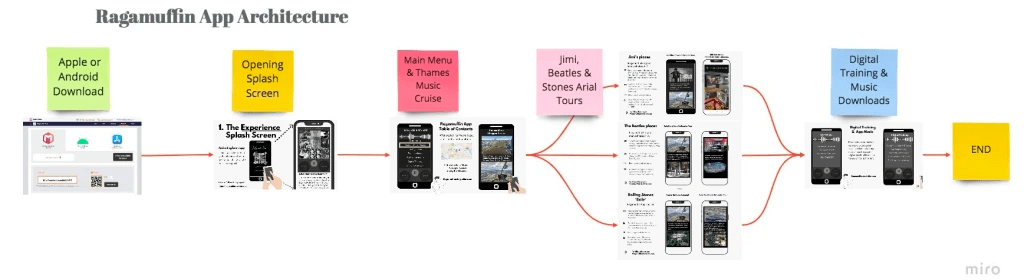
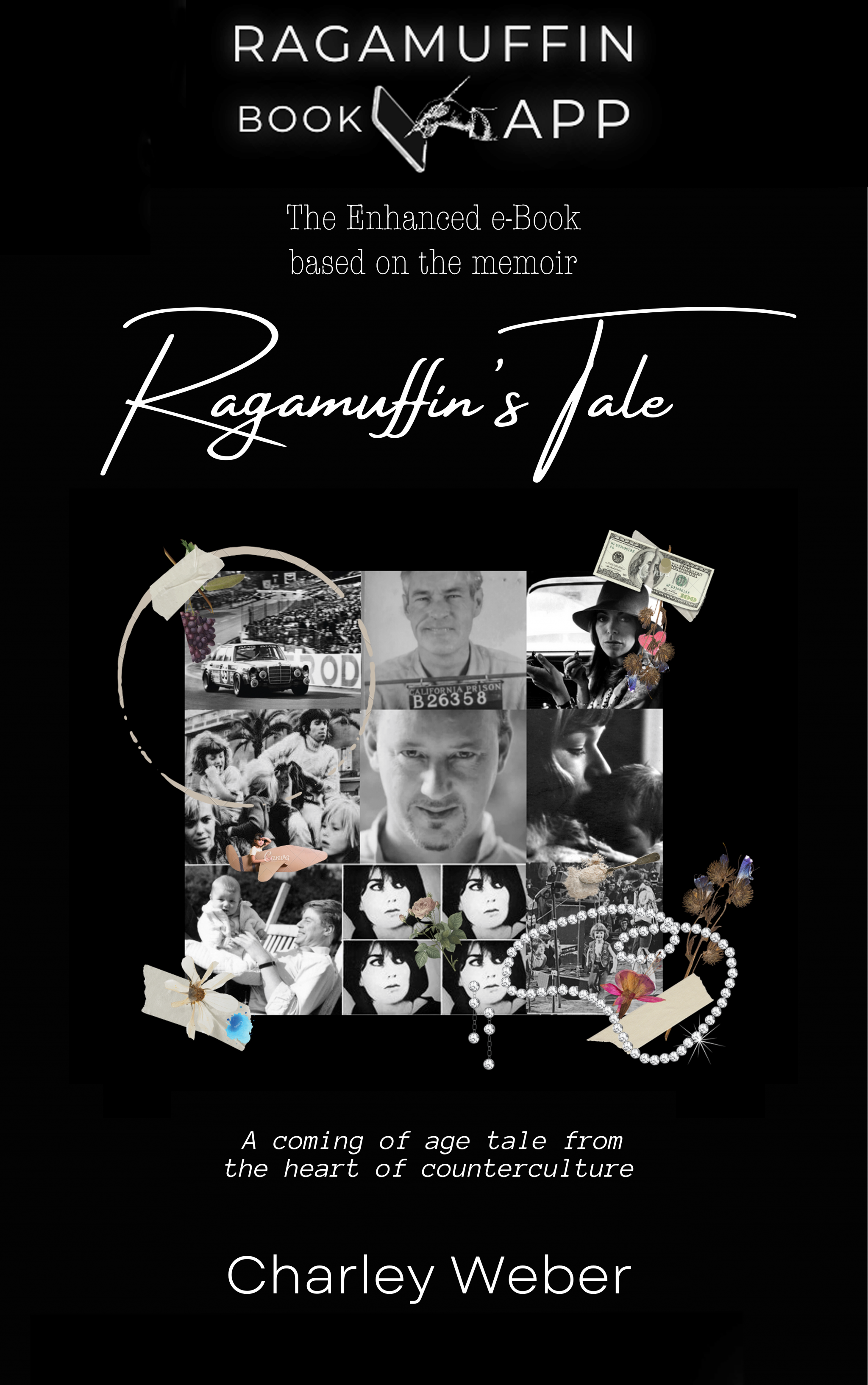
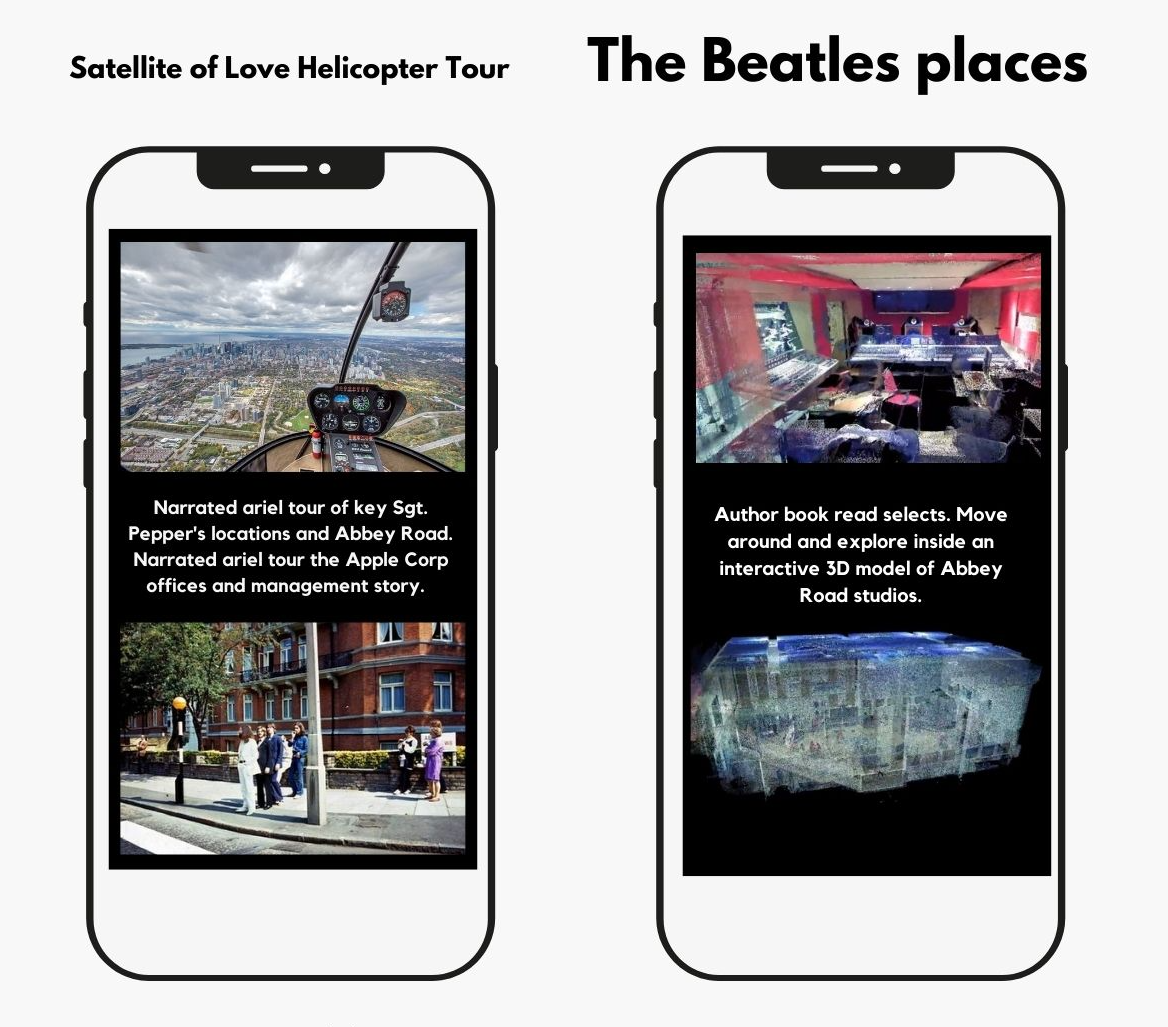
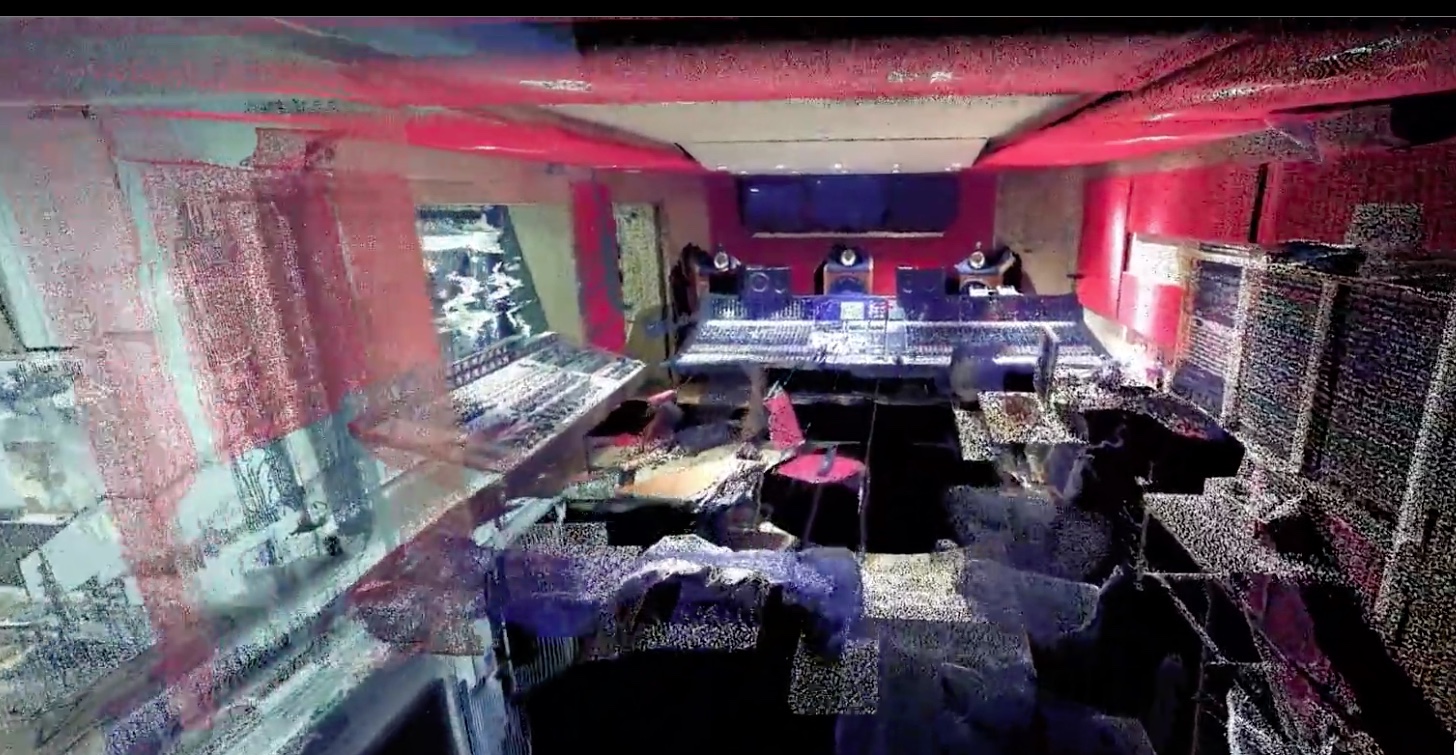
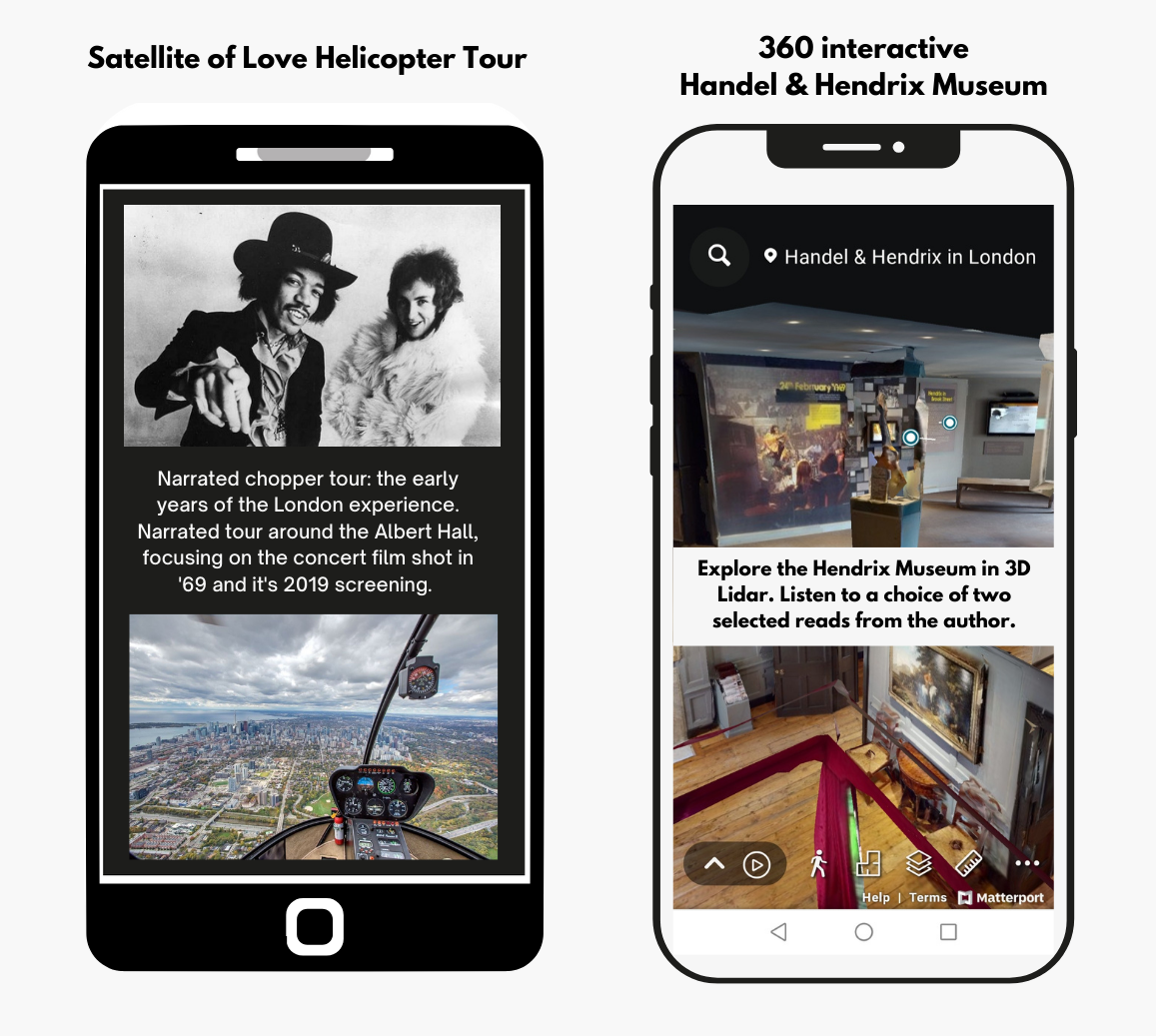
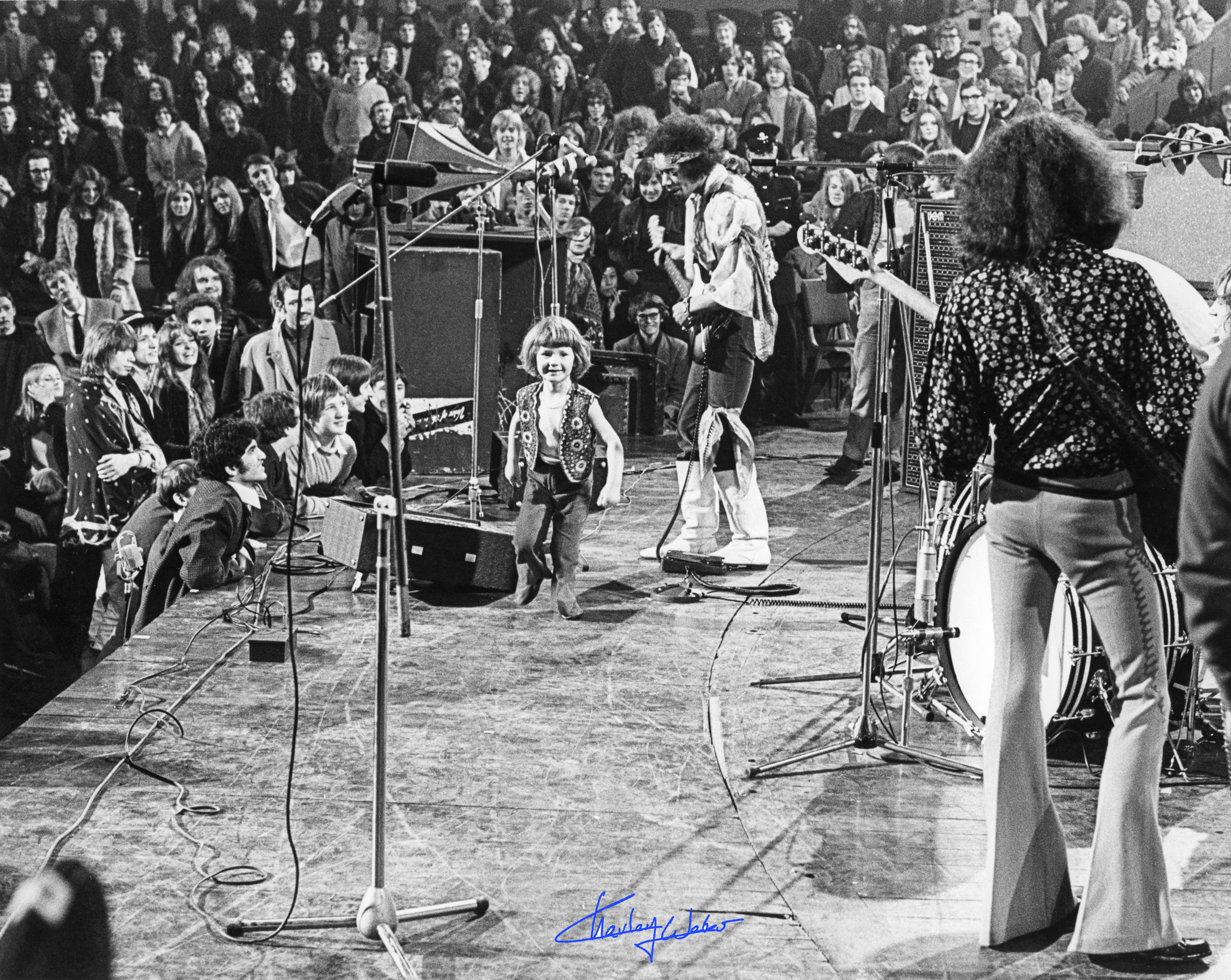
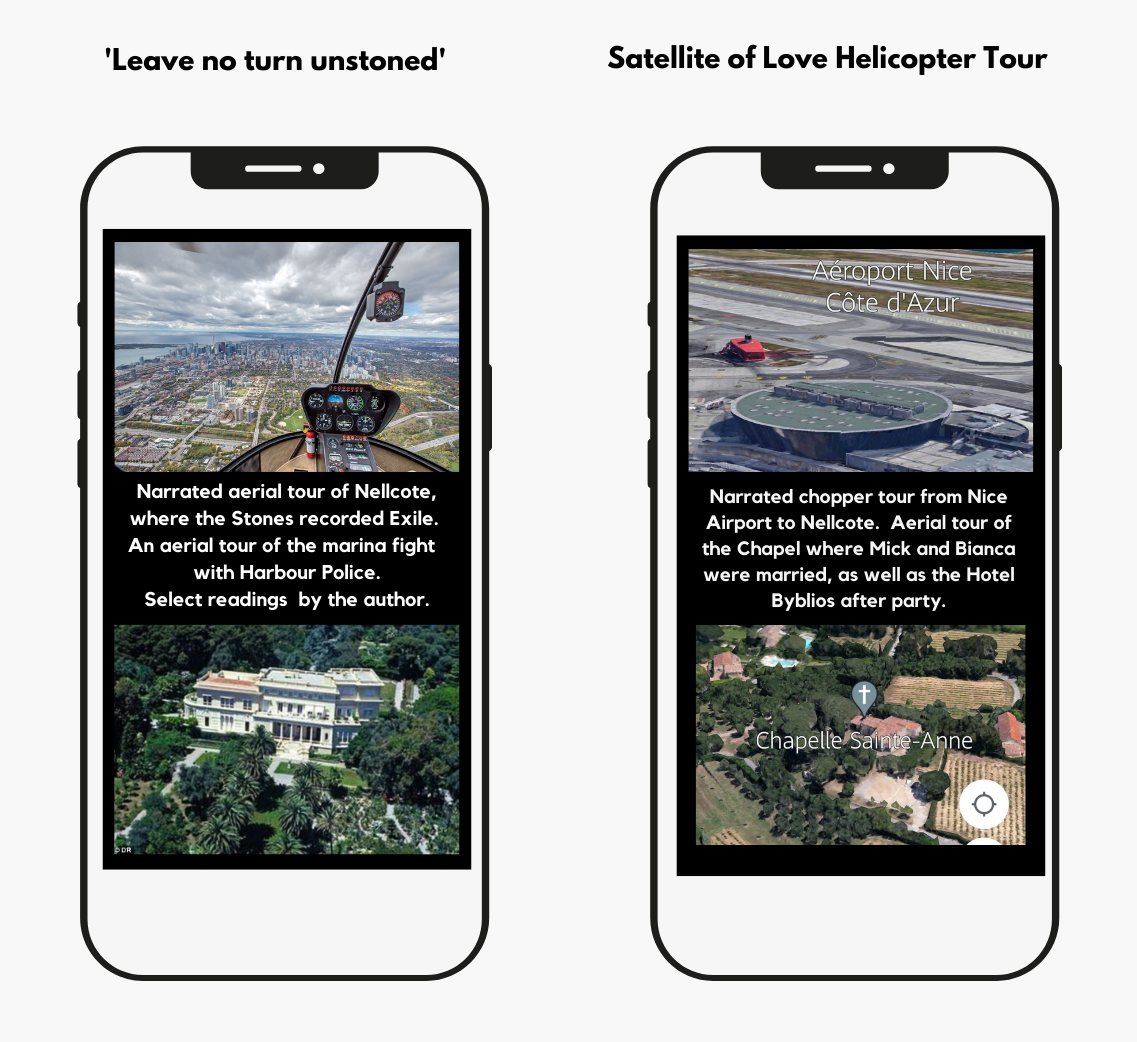
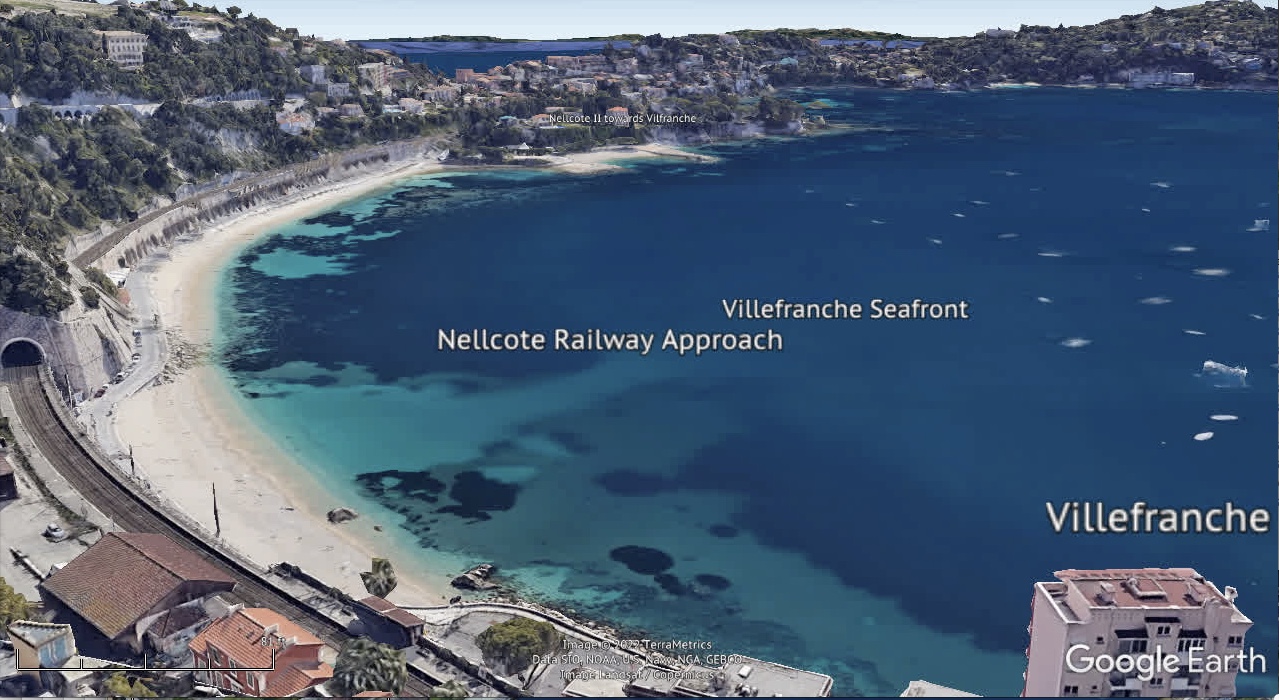
The app offers an enhanced, multimedia complement to the printed book. There are narrated documentary flyovers of many of the character’s homes and recording locations in the book, like the Albert Hall and Nellcôte, as well as author reads and links to user navigable 3D LiDAR models of historic studios and sites across London.
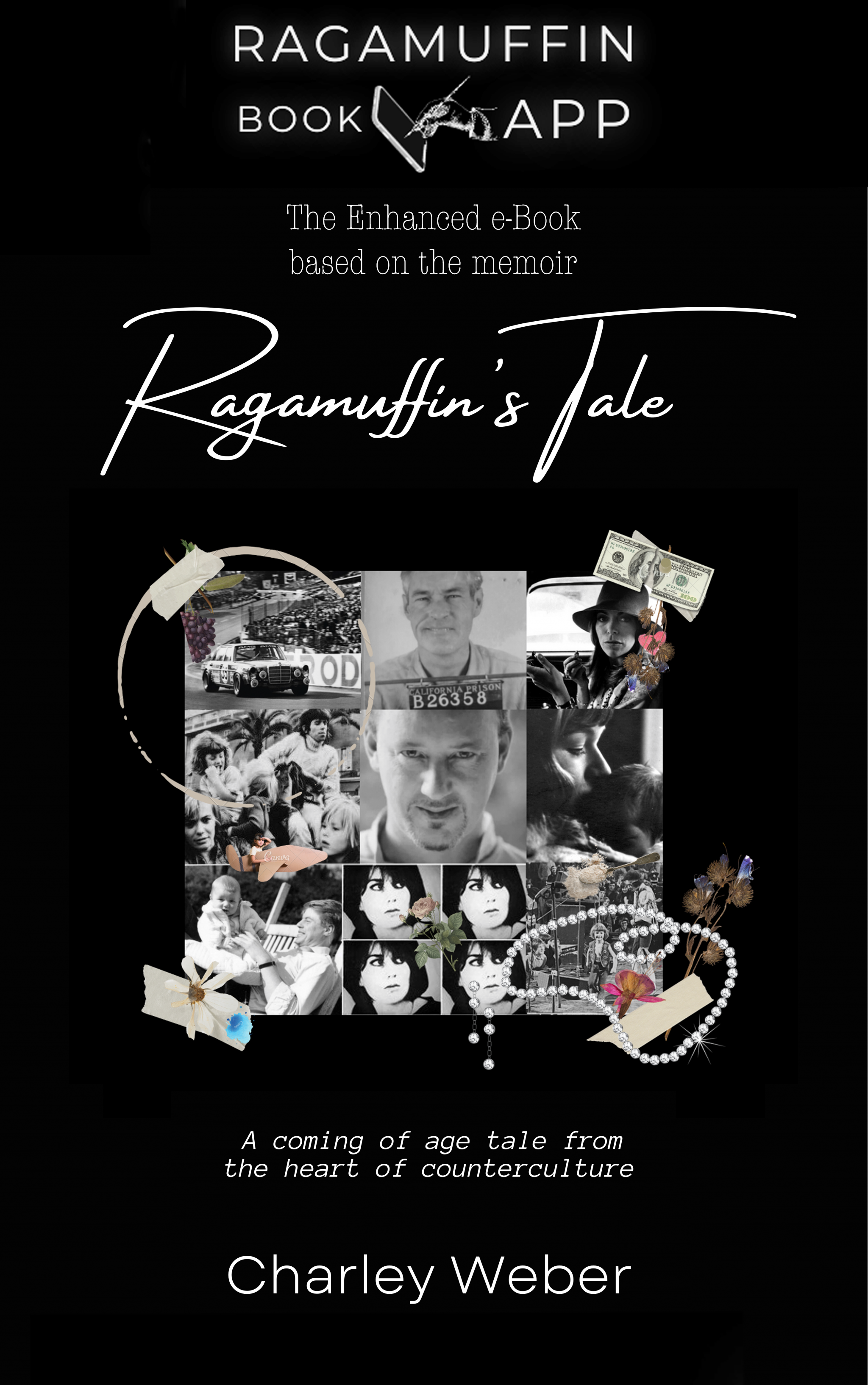
It was developed for a master’s thesis, as a model to examine the potential for more adult targeted book apps for non-fiction, like documentaries, memoirs, history and antiquities. The thesis research indicated a large gap in the market for digital apps dedicated to adult non-fiction, as opposed to mostly AR animated children’s book content.
The model in theory can be applied to different forms of non-fiction books, including history, memoirs and sights of antiquities.
There are a number of ways digital has shaped non-fiction storytelling in what many are already calling a post digital age, including a need to process large data dumps from parties such as WikiLeaks, Web Documentaries – which now have categories at a number of film festivals – as well as Open Source news and current events reporting agencies, like Bellingcat, Forensic Architecture and The New York Times Visual Department.
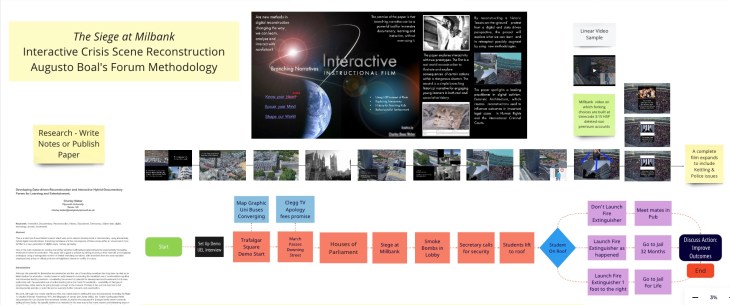
Less developed are apps offering audio visual experiences to augment non-fiction books about artists or history, as well as another area of fascination: interactive crisis behavioural modelling based on the ideas and methodology of practitioners like Augusto Boal and Forum Theatre, but applied to interactive film.
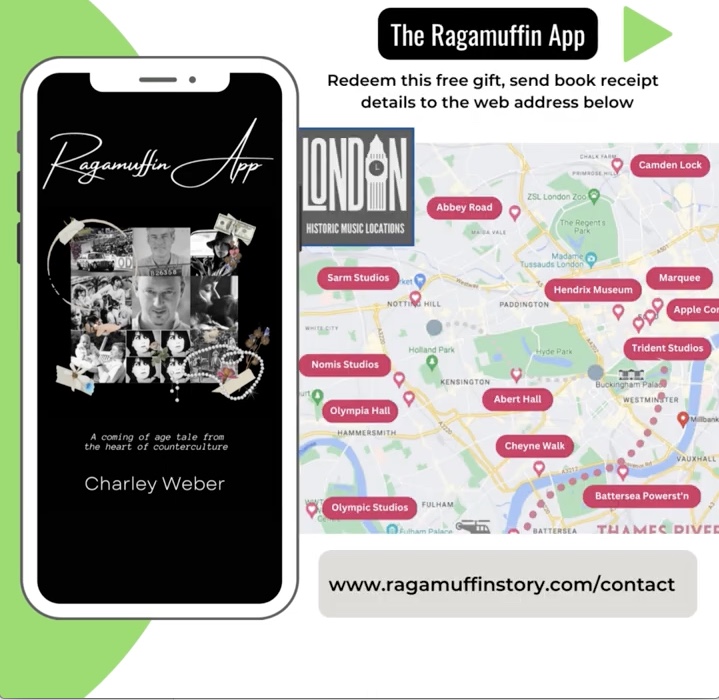
For research I first looked at the history of the development of the eBook and mobile app, to see where the enhanced book as a format initially bloomed and then seemingly got lost.
The introduction of the eBook as mass media came about when Amazon introduced the Kindle in 2007. It was estimated that Amazon quickly captured a market share of two thirds of all eBooks.
By 2015 sales of the eBook had reached about a quarter of total book sales and has since fallen back to about a fifth of sales. This retrograde trend, according to Arnaud Nourry, chief executive of Hachette Livre, who built the company into the world’s third largest publisher, is “not going to reverse” (Flood, 2018).
By 2015 Arnaud Nourry had acquired three games development companies in an effort to bring about the suitable conditions for a seemingly perfect union between books and new media in the preceding two years.
”I’m convinced there is something we can invent using our content and digital properties beyond eBooks, but I reached the conclusion that we don’t really have the skills and talents in our companies, because publishers and editors are accustomed to picking a manuscript and creating a design on a flat page […]They don’t really know the full potential of 3-D and digital”.
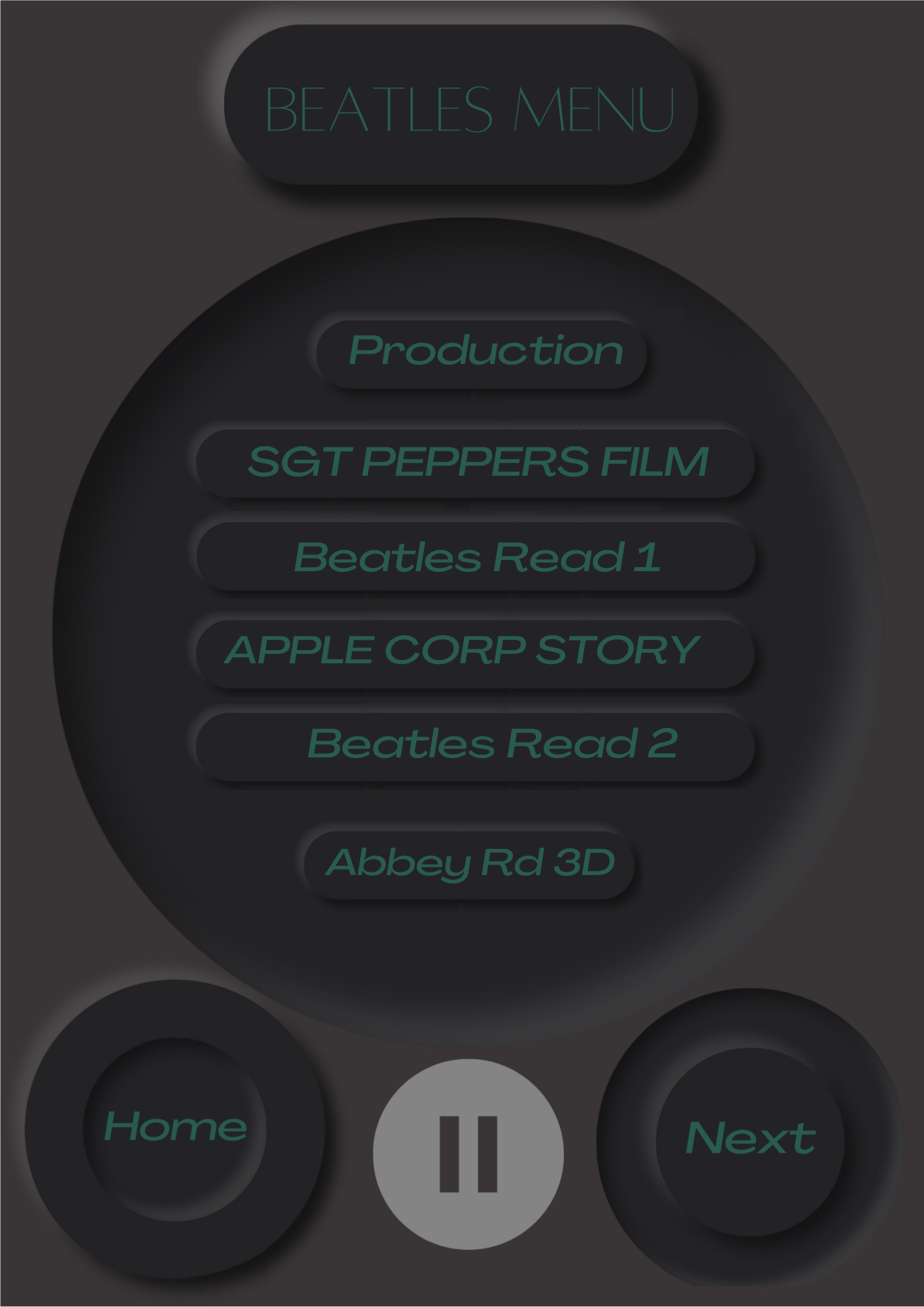
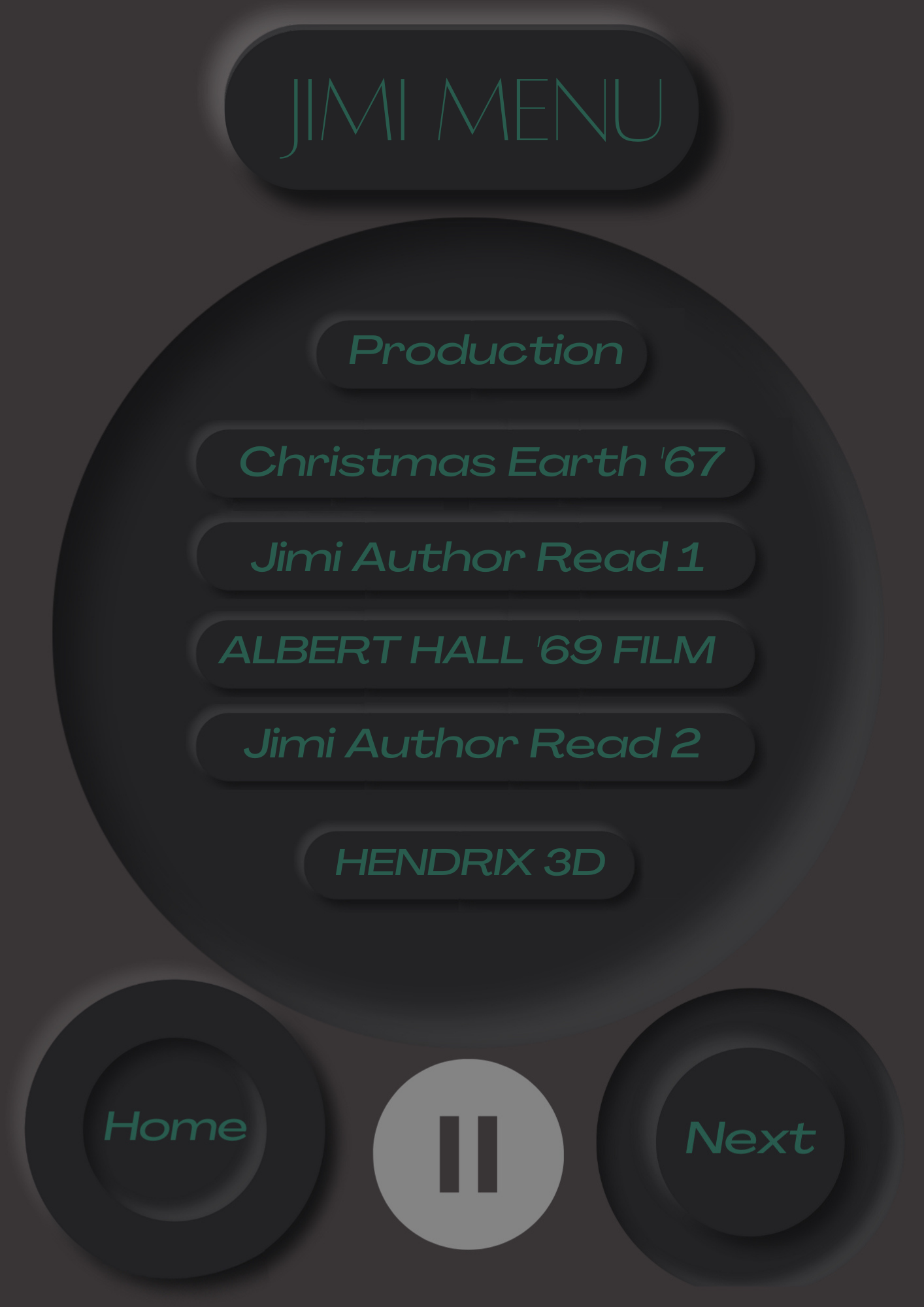
The app menus open with a title screen, adapted from the book.


Why Develop Interactive NonFiction?
- Digital platforms offer an environment more familiar to a new generation of users, accessible through the internet and mobile apps.
- The app stores are saturated with enhanced, AR types of apps for young learners. In terms of apps created for non-fiction targeting adults, very few titles appear to exist.
- ‘’Digital history has the capacity to reshape our conception of History, to generate new lines of inquiry, challenge entrenched theories using vast sets of data and materials‘’ (Hirsch Digital Humanities Pedagogy)
- While traditional journalism, books and documentaries seem here to stay, advances in tech have opened up new, digital forms of non-fiction analysis and storytelling.
- A handful of news and investigative agencies are fully engaging with new, more accurate forensic digital methods. These include Bellingcat, Forensic Architecture and The New York Times Visual department.
To get a free copy of the app, along with my research papers, subscribe to the website or buy the book and send in a receipt or proof of purchase.



 Charley Weber Portfolio
Leave a Reply