Excerpt from my upcoming, 2nd book “Freedom & Control’’
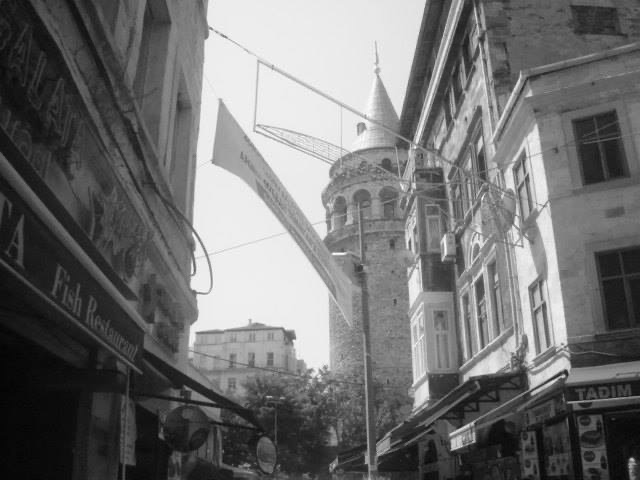
Like everyone else around the world, I had been closely following the Arab Spring as it ricocheted around the Middle East and North Africa. A child of counterculture parents in the sixties, although I’d been steeped in revolutionary politics, I’d never been on the front lines until quite recently while taking a journalism course, when I was swept into Milbank as the student protestors laid siege to the building that housed Conservative Party Headquarters. Now I’d be heading back to Turkey to try and report on Gezi.
Chapter 1. Turtle Beach
Watching events unfold across Tunisia, Egypt, some of the Arab states and then Gezi, it seemed entirely possible that it was the fulfilment of a hippy world spring. Something which most of the artists I grew up around, friends of mum’s or dad’s, like George Harrison or Jimi Hendrix, had been hoping to affect.
When I got off the plane in Turkey, I landed in Dalaman, the West coast airport servicing both Bodrum and Antalya. Since booking my ticket my itinerary had changed after a friend of a friend in South East Turkey had withdrawn an offer to put me up in the South East along the coast near to the Syrian border. Although eager to push on with my plan to find and research stories for a journalism writing portfolio, while the Syrian border where a former client and journalist, Can Dundar, who I had edited the Earthquake Benefit film for, had unearthed and reported on the oil for cash scandal involving Erdogan’s son, Syria was in the middle of a war and an incredibly dangerous place. I took it as a sign to skip that part of my journey, which meant I was now faced with a gargantuan overland trip to the North of Turkey to the Black Sea, a lush green region of Turkey, historically inhabited by a mixture of Greeks, Armenians and Turks. An area Turkish poets and songwriters have written about for centuries and also one where my ex-wife had spent a mysterious summer learning survival skills from her friends in the Kurdish resistance.
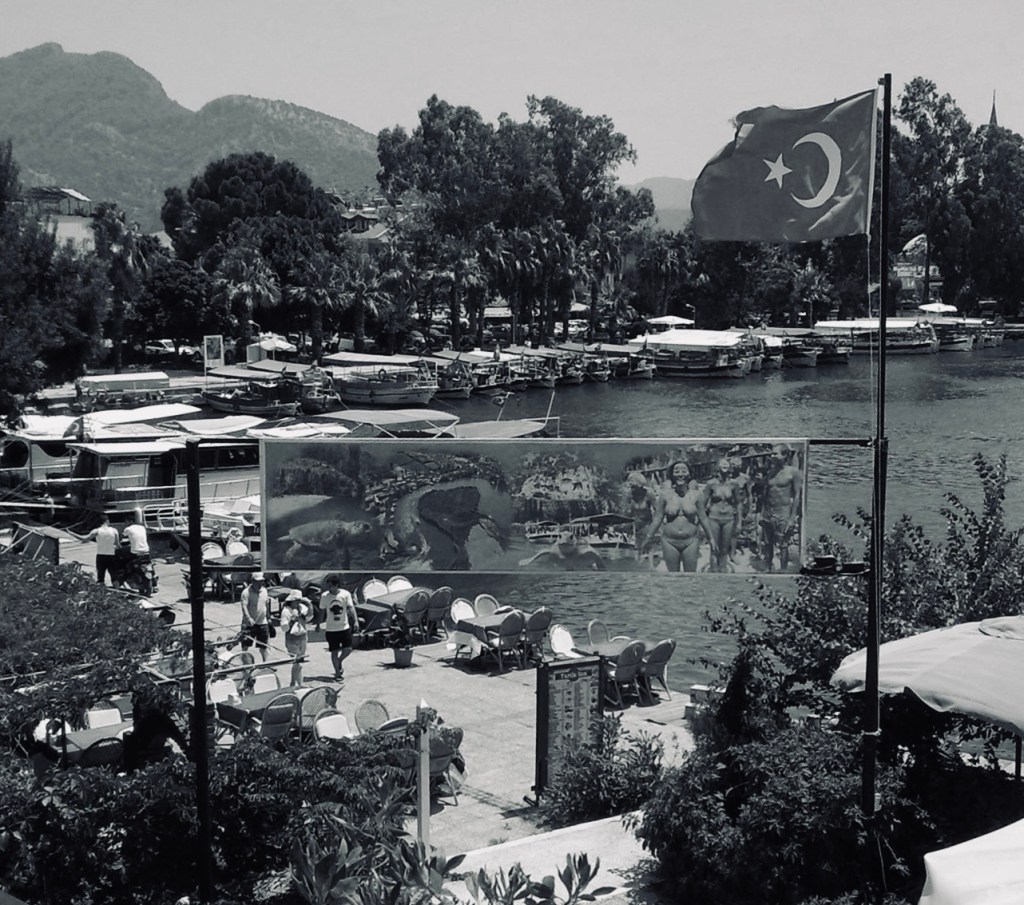
This is what I was thinking, only parts of which I related to the taxi driver as we left the Dalyan airport. Being a good listener with a calm head and knowing the distances involved, he suggested I stay over and spend a night or two in the locality of Turtle Beach, enjoy the area, and the sites in preparation for my long trip to the opposite end of Turkey, a huge country.
That sounded like a good suggestion, to relax for a bit, so I agreed and the taxi driver took me to a reasonable, but comfortable hotel overlooking the river estuary leading down to Turtle Beach. Once checked in I used the evening to freshen up, explore the town a bit, find a Turkish Sim card for my mobile and enjoyed a drink and some acoustic music in a local garden spot.
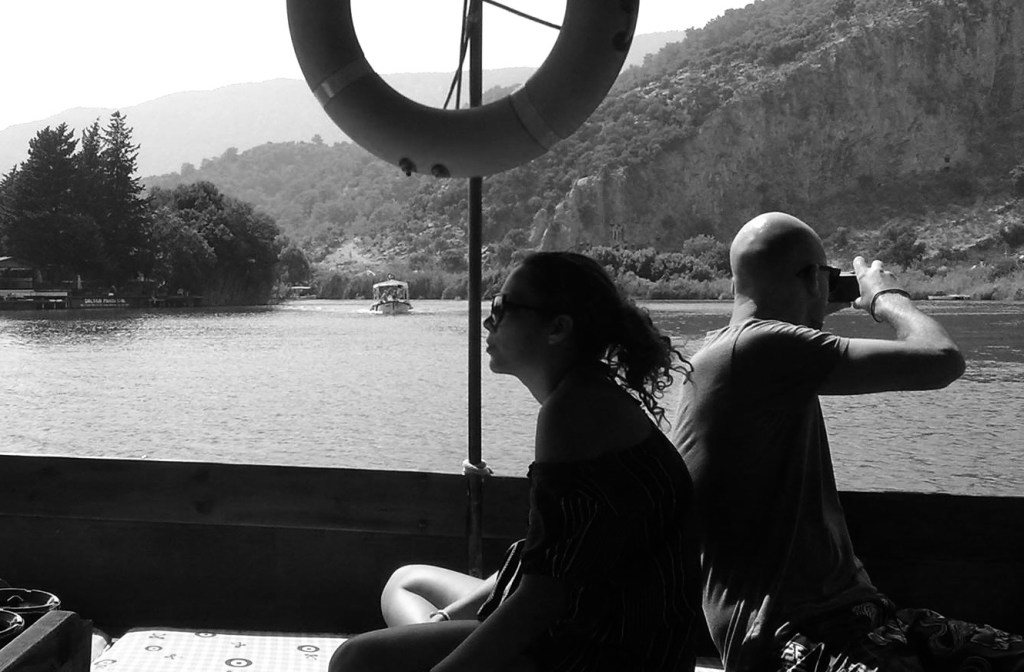
The next morning, I asked the concierge how to get to the beach, walked around the harbour and boarded a small boat waiting to fill up and take us down the estuary to Turtle Beach. There I struck up a conversation with another passenger who turned out to be a history professor, and the daughter of a former Turkish General. She was revisiting her homeland, Turkey, for the first time after many years and seemed both excited and a little nervous about the trip. It turned out that as a younger woman and active human rights protestor, she had long ago had to flee during one of the many violent military coups which shook the country between the 70s and 90s. She made her way as a political refugee to Sweden where she met a guy and got married, raiding a family in Sweden where she now taught history in a college.
It turned out that she had many years ago been part of a secret hideaway and beach commune of socialists, students and human rights activists at Butterfly Valley near Fethiye – not a million miles from Turtle Beach and that her father had been a moderate General during one of Turkey’s military coups in the 80s. Most of the other generals being more right wing. Being a young student at the time, she and her circle of friends were progressive, often caught up in protests, a bit socialist and left leaning.
During the early stages of the coup this had not been a problem between her and her father, but as violence between left, right, and Islamist’s spread across the country, the military establishment clamped down on the factions, turning increasingly authoritarian in order to maintain order and as they saw it, maintain Ataturk’s secular vision for the Republic, non-religious but also not a Socialist or revolutionary society. However, in order to keep his position, her father was questioned and subsequently had to shift his political views somewhat rightward politically.
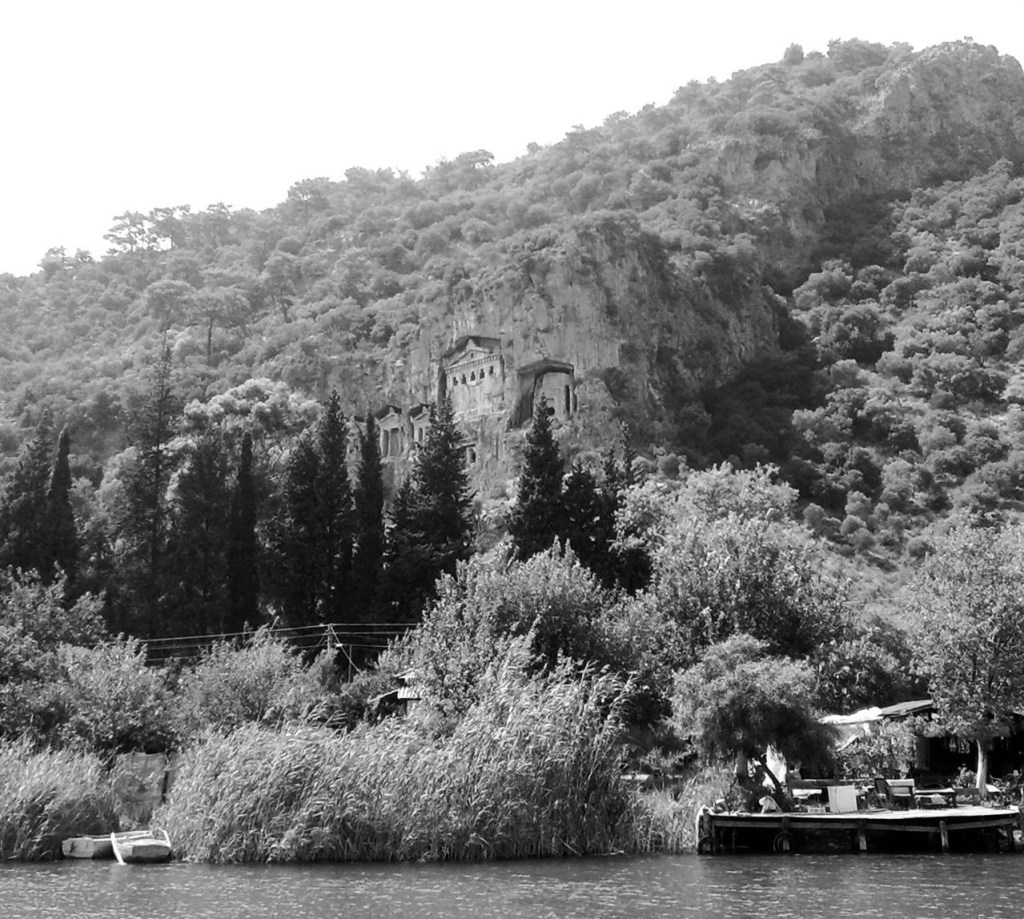
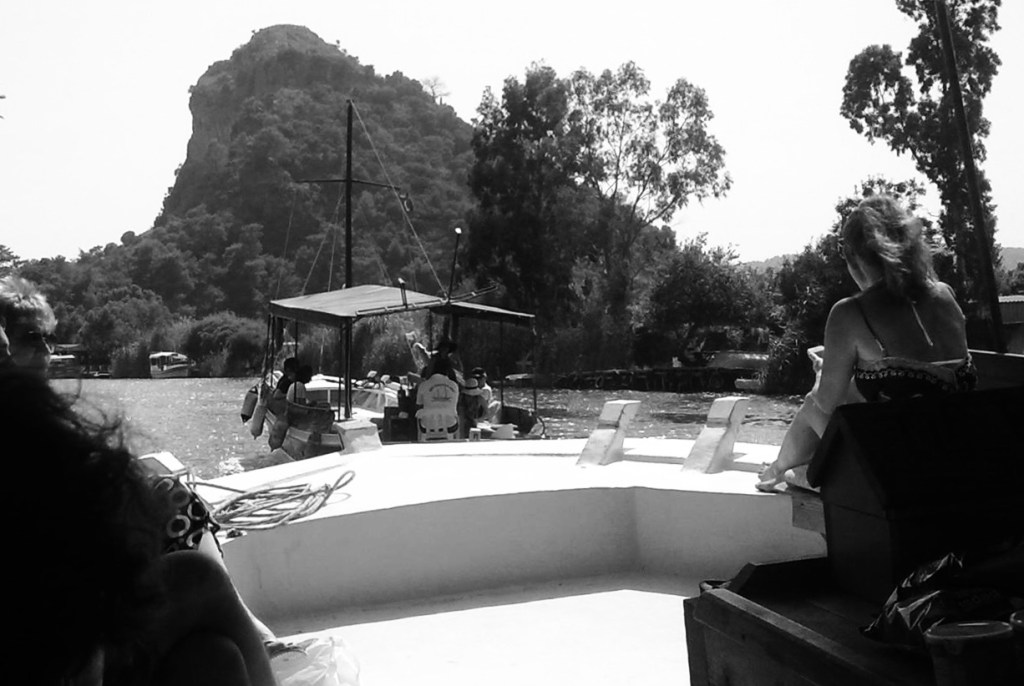
As we chugged past tombs carved into the cliffs, the captain’s voice came over the intercom to inform us that the apart from the tombs, the Lykians had also created the earliest form of democracy.
It was at that point, my friend continued, that as a result of the groups increasing clashes with the authorities, they judged that secret and political police were likely closing in. She and her young friends left Istanbul, heading south and west along the coast where they stopped and created a sort of hippie commune on a beach near Fethiye in the area called Butterfly Valley. This was seen as an ideal location, due to its restricted tidal access. It was easy to monitor the comings and goings of boats or visitors, as they were only able to reach the beach and commune during high tides, which were limited and only happened twice daily.
The situation caused a biblical rift between father and daughter, and as it widened, in an attempt to escape the authorities trying to round them all up, many of her student friends escaped what they imagined would be an inevitably dark conclusion, as a result of running from law, and they caught a local ferry across to Rhodes in Greece, a common route for political exiles.
As riveting to me as all this was, I could sense that the overtly political talk was making her husband nervous, and that even though decades had passed, the events were still raw and close to the surface. I asked her if that was how she had left the country, on the same Ferry to Greece. She said no, that she had been captured and interrogated by the right leaning military her father had become allied with. She had left Turkey shortly after her release from jail and hadn’t been back there since.
 Charley Weber Portfolio
Leave a Reply