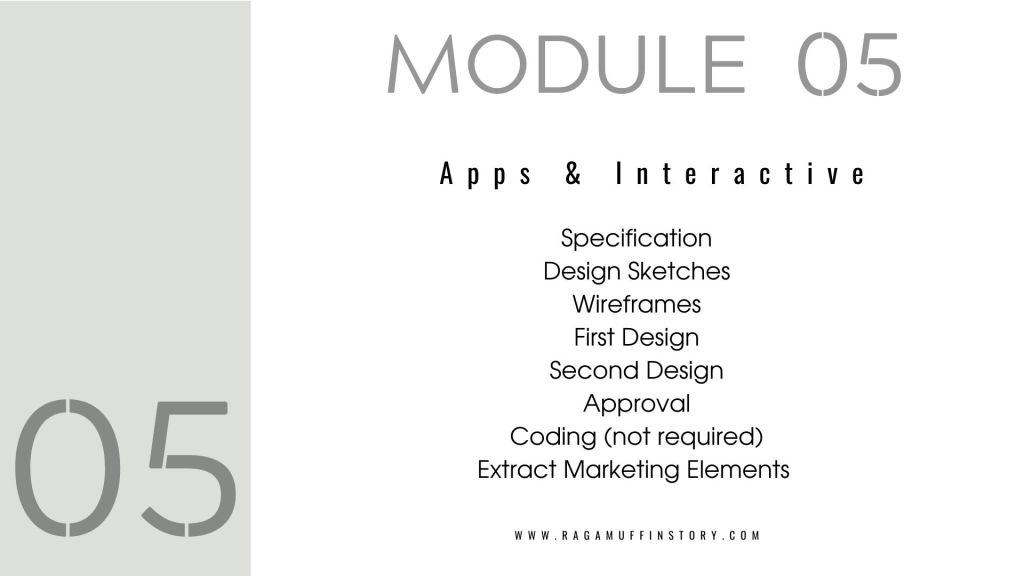
The theoretical work is to understand the process of UX design and prototyping working models, using Figma, Miro or Canva, ideally utilising the media assets created during other core course modules: Graphics, Scripting, Shooting and Post-Production.
In a good first prototyping class exercise, the learner is tasked with ideating and sketching screens to create their own simple portfolio app and then create a downloadable version using a no-coding freemium platform like Mobincube.
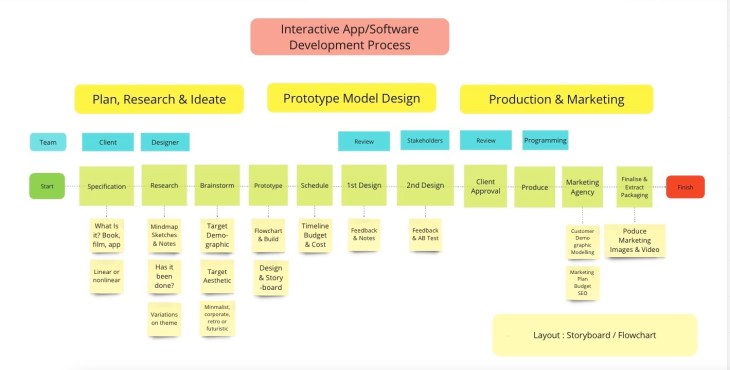
The second learner project is to lay out and prototype an interactive news or mini documentary design based on the medium length script developed for Writing and Shooting, modules 2 and 3.
An additional prototyping exercise is to expand the flowchart of the Siege at Milbank to create a more complete process and behaviour analysis film. The applications of which can and are used to improve social as well as corporate processes of tricky points of contact or conflict in manufacturing, sales or other types of industry workflow. This type of interactive process film borrows from Augusto Boal’s Forum Theatre methodology.
By extending the story frame or screen ‘play’ flowchart to include other actions within the conflict, such as Kettling – the other side of the claimed excesses during the student UK protest drama – and by applying the same process to choices at points of escalations, it’s possible to build up a clearer picture of ‘good’ and ‘bad’ decisions made during the emotional and often chaotic and high-risk interaction. While extracting lessons is not always easy, reconstruction linear documentaries, like The Battle of Orgreave, which recreated the clashes between police and union members on the strike, have been used to expand the viewpoints and included both the original police and strikers in the filmed action.
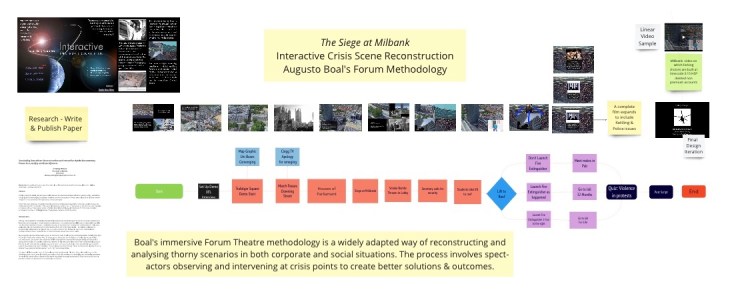
Whether in theatre or film, the process requires an audience observe a story, which is played straight through from beginning to end. The viewers can take notes, but should not comment at this stage.
During a second run through, the audience is invited to raise their hands at any point in the film when they find any of the events troubling – anything less than ideal, problematic or unacceptable. At that point, while the play is stopped they must suggest alternative behaviours, or courses of action, to redirect the story line to play out in an acceptable way. Important to this are outcomes: what are the actors trying to achieve? Is it to effect a sale, alter the course of some social, environmental or political legislation?
This in a way is a form of journalist as a social and behavioural analysis. The joke about how many shrinks it takes to change a lightbulb – just one, but they have to really want to change – holds true here. Are the two sides clear on and behind their respective goal or does mission creep mean the sometimes they view the other as the enemy, leading to unacceptable types or levels of escalation?
 Charley Weber Portfolio